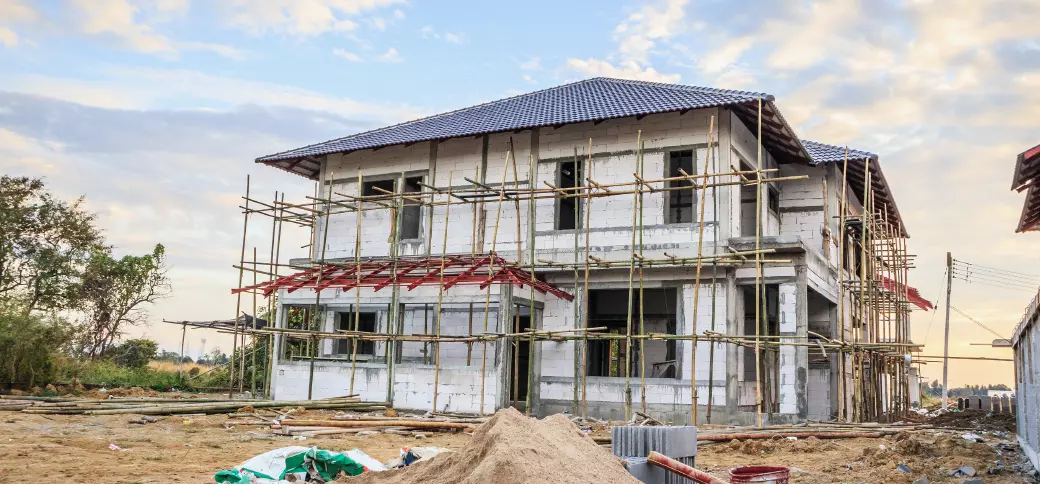
Building a new house construction is a major point in our life; this is our dream. We can express our uniqueness there, create memories, and build a foundation with feelings and emotions included on it. We make plans for the future to stay in a house for a long time on this planet in our country or state. It’s very important to understand why building a house could be stressful, particularly for first-time homeowners without proper knowledge. However, with the right information and guidance, everybody can build their house with expert guidance or support perfectly. We share the complete process of home construction, with the entire process broken down into smaller, more manageable steps.
We are talking about the house buildup with all steps included with different phase of the home construction process, helping you visualize the journey from start to finish and making the entire experience much smoother.
Get premium construction services with 100% transparency, MDDA approved maps, and earthquake-resistant engineering.
Their is 3 Phases of House Construction
Any house construction is typically divided into 3 main phases: pre-construction, construction, and post-construction. Each phase involves a specific task process, and within each task, there are a various series of steps that need to be completed carefully and properly.
1. Pre-Construction Phase: Setting the Stage
Before you start your new house project with bricks, there’s a significant amount of planning and groundwork that is required to make our project work smoothly.
Step A: Initiating the Project
In the first step, you, as the homeowner, make your clear vision for your house. Whether you plan to build a 2BHK, 3BHK, or 4BHK home construction, this is the first phase where you decide the fundamentals & principles of construction with the number of rooms, layout, design, and budget. You are also required to determine financing options for establish your new project design with comes under in your budget.
Step B: Land Survey and Soil Testing
Once the design is ready, a professional land surveyor or engineer will inspect the site for planning the house design or maps. This process ensures that the land is free from any kind of issues that affect our construction delay. Soil testing is also important, as it determines the strength and load-taking capacity of the building. Also, make sure the water leakages do not come under the soil. Which makes sure it builds the solid foundation for the number of floors built on the particular project.
Key Activities:
- Measurement of the plot and boundaries of a land.
- Checking for availability or fitting utilities like water, gas, and electricity lines
- Soil analysis where the structure is a building of a house (moisture content, grain size, and stability).
Step C: Design and Specifications
When the architects and engineers work together to create detailed blueprints of your house, this is a great strategy for house making contractor a strong house design or long-term stand. During this stage, they are finalizing the structural details, materials, workers, labor, and finishes that meet your aesthetic and functional requirements.
Step D: Getting Approvals
Before any physical work begins, you’ll need to get various permissions and clearances from local authorities. Like in Dehradun, you need to get your house map approval from MDDA Dehradun. Then you will get a title certificate for your land and permission to build a house on your land. It’s slightly different according to the different zoning approvals depending on the locations or criteria of a house and building permits, ensuring that your construction is compliant with all local laws and regulations.
2. Construction Phase: Turning Vision into Reality
This is the 2nd phase, where the physical action starts to make your dream house. The foundation is starting to build in a process; walls go up, pillars are going to stand, and filling the forms or putting the concrete or cement. and your dream home begins to take shape.
Step E: Site Preparation
This is the clearing stage and leveling of the land due to avoid some leveling issues on the basis of area surface. The construction site will be cleaned of debris, unwanted plants, and other obstacles, big or small, including unwanted stones. If necessary, excavation work is done to level the ground for the foundation, then it’s ready to go for the further process.
Step F: Laying the Foundation
The good foundation is the most critical part of your house structure. It takes the entire weight of your building. Depending on the soil property and structure design, various types of foundations—slab, crawlspace, parking area, store area, or basement—may be used. This is a highly skilled phase that requires careful measurement and digging to make sure the other house construction workers depend on them.
Step G: Plinth Beam and Slab
After the great foundation, a plinth beam is constructed to provide additional support, followed by the installation of the plinth slab. This ensures your house has a solid base, capable of withstanding seismic activities and weather-related pressures or balancing the load of a building.
Step H: Erecting Columns and Beams
The superstructure begins to give a shape to your house. Vertical columns and horizontal beams are installed, creating the skeleton of your home. These beams hold the structure together, transferring weight from the roof and floors to the foundation.
Step 9: Brickwork or Masonry
This is the stage where walls start to take form according to the already designed map. Whether you use traditional brickwork or modern concrete blocks, skilled masons will build up the walls of your house. The placement of doors, windows, and any air-pass areas is also taken into account during this stage.
Step 10: Installing the Lintel and Roof
Once the walls are built by the builders of a home, a lintel (a supporting beam) is placed above windows and doors. After this, the roof is constructed to provide shelter from the elements with a mixture of concrete or cement.
Step 11: Plumbing and Electrical Wiring
During this stage electrical lines, plumbing pipes, and gas lines, or other wifi or usable wiring, are installed. These are embedded in the walls and ceilings, ensuring that they do not appear in a look to see a cleaner look. This is also when wiring for air conditioning, lighting, and other electrical systems takes place.
Step 12: Flooring
Now that most of the major structural work is done on your new home construction, flooring is installed. Then other things are going to be installed in the house, like marble, tiles, railing, and wood, and more modern solutions like epoxy flooring. This step will define the style and functionality of your home and give an attractive look for a guest.
Post-Construction Phase: Putting the Final Touches
After your house is built, it’s time to finalize the giving of a finishing touch to everything and make the space livable.
Step 13: Interior and Exterior Finishing
Interior design work starts with plastering the walls, fitting doors, and adding windows with furniture or different lighting setups. The exterior is already painted and cleaned, ensuring the home construction is aesthetically pleasing. You may also hire an interior designer, which can help to make a home look more modernized to help with furniture placement, decor, and overall styling.
Step 14: Painting
Fresh coats of paint are applied on house walls in both areas, interior and exterior, of the home. This not only enhances the look of the house but also protects it from weather or environmental damage like rainy season and cold or hot weather.
Step 15: Quality Checks
In the last stage there are quality checks that are essential to ensure the entire building process meets the required safety and building standards before living starts and the key of the house is given to a customer. The expert team inspects the house to ensure everything is functioning correctly, like lighting, gas pipes, fans, insulation systems, or other electrical functionality, and all materials are used properly. You’ll also want to ensure that everything is ready for occupancy before you move in.
Conclusion: A Journey to Your Dream Home
Building a new house is an intricate process that involves planning, coordination, expertise, systematic precision, and precision. From the above discussions about your dream home, from starting to finishing the build-up, every step of the process requires proper attention to detail. Another thing is that each house construction project is unique; following a well-defined process makes the particular Dehradun house design or outcome safe, functional, and beautiful to stand for the long term.